
Digital Marketing in 2026: Why Your Business Needs an Agency

Right then. Time for some honesty.
Digital marketing in 2026 is no longer just complicated. It is overwhelming for most businesses trying to handle everything alone. We see it all the time at Clever Marketing. People give it a go themselves and fair enough. They hire someone who is good with social media which usually means they post occasionally and hope for the best. Or they patch together a few freelancers who never quite speak to each other. Then suddenly they are tired, the results are flat, and they begin to wonder if digital marketing even works.
It does work. Beautifully. But the way most businesses approach it simply cannot keep up anymore.
The Many Benefits of Interactive Digital Brochures
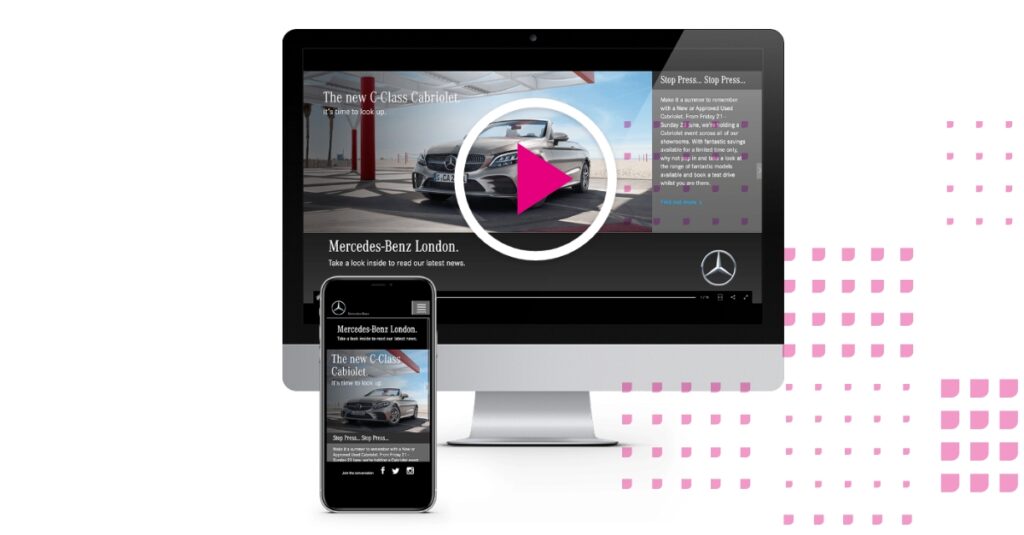
A good brochure still turns heads. There is a moment when you slide it from an envelope, feel the weight, notice the finish, and you cannot help but slow down. That presence counts. Our designers love creating that feeling and our clients love giving it to their audience. Now take that same creative energy and place it in a digital space where it can move, respond, and invite action. That is where digital brochures come into their own, because they keep the craft of print while adding the benefits of the web. Your story can include animation that guides the eye, video that sets the tone, and links that carry a reader from curiosity to conversation in a single click. Why Digital Brochures Outperform Traditional Print What makes a digital brochure genuinely useful is the freedom it gives you after launch. Print is final. Digital is living. Prices change, ranges expand, a team photo needs refreshing, a case study is ready sooner than planned. You update the brochure and everyone sees the latest version without waiting for the next run. For fast moving sectors like technology, finance, hospitality and ecommerce this agility keeps your message current and your brand sharp. It also removes the cost and delay of reprints, which is often the hidden reason marketing materials go out of date. Distribution becomes simple. You can host the brochure on your site, link it from a campaign email, place it in a sales follow up, or sit it behind a form when lead capture is important. For events or direct mail you can print a small run and add a QR code that opens the interactive version, so the physical experience leads naturally into a richer one online. Your audience can view it on a laptop at a desk or on a phone on the train. Sharing is easy for your team and even easier for the people you want to reach. How Interactive Digital Brochures Increase Engagement and Conversions The best part is how a digital brochure deepens engagement. A static chart becomes a quiet animation that explains itself without shouting. A service summary links through to a detailed page for readers who want to explore. A short welcome from a managing director sets context in a way a paragraph never could. Contact forms can sit inside the experience so a reader can ask a question or request a quote the moment interest peaks. Add analytics and you start to learn from behaviour. Which sections hold attention. Which videos get watched. Where people choose to click. Those insights help you refine both the brochure and the wider marketing that surrounds it. Clients often ask whether this means print is over. It is not. They work together. Print builds presence and memorability. Digital adds interactivity, measurement, and speed of change. The blend is powerful. We have seen it with education and venues where the decision journey includes both emotion and detail. Adveco Education uses a digital brochure to show how schools can reach net zero by 2050, turning a complex subject into something clear and convincing. Kingswood Weddings invites couples to browse the venue experience online with a brochure that feels elegant on mobile as well as desktop. Both pieces still look beautiful in print. The digital versions make them easier to share and measure. Blending Print Design Craft With Digital Marketing Performance Behind all of this sits craft. Our team cut their teeth in traditional design and now work daily across websites, paid media and search. That mix matters. It means the design has the polish of print, the build has the discipline of the web, and the brochure earns its keep in a marketing plan rather than sitting outside it. We plan the calls to action with care, place forms where they feel natural, and connect analytics so you can see what is working. When the time comes to iterate, we make edits quickly so the brochure keeps pace with your business rather than lagging behind it. Digital brochures turn a familiar format into a living asset. They are easy to update, simple to share, engaging to read and measurable in ways that make future decisions smarter. Print still has a place and always will, but when you bring your latest brochure to life online you give your audience more reasons to lean in and more ways to respond in the moment. If you would like us to create a digital brochure that looks beautiful and works hard, call Clever Marketing on 01276 402 381 or send us a message through the contact form.
Why your website gets visitors but not enquiries

You check the analytics dashboard and the numbers look decent. Traffic is up, maybe even trending nicely month on month. Then you check the inbox and it’s quiet. No new enquiries, no missed calls, nothing in the contact form. Somewhere between someone landing on your site and that same person picking up the phone, the whole thing falls apart. This happens to more businesses than you’d think, and it rarely has a single cause. It’s usually three or four small leaks that add up to one big one. We see this constantly with clients across Hampshire, Surrey and Berkshire. A trades business gets found on Google, gets clicks, and still can’t work out why the phone isn’t ringing. The honest answer is almost never “you need more traffic.” It’s that the traffic you already have is hitting friction somewhere along the way. This guide walks through where that friction usually sits and what to actually do about it. Your site might be losing people before they even read a word Before anyone can enquire, they have to actually wait for the page to load, and this is where a surprising number of businesses lose people without ever knowing it happened. More than half of mobile users, 53%, will abandon a page if it takes more than three seconds to load, according to a Google study. Three seconds sounds generous until you realise how many small business sites, particularly ones built on older themes or stuffed with unoptimised images, take far longer than that to show anything useful. The scale of the problem is bigger than most site owners assume. The average web page load time across the top 100 sites worldwide sits at 2.5 seconds on desktop and 8.6 seconds on mobile, according to Tooltester’s analysis. That gap between desktop and mobile matters enormously, because most of your local traffic is arriving on a phone, often from a Google search made while someone is standing in their kitchen looking at a leaking tap or scrolling through options on the train home. If your site takes eight or nine seconds to become usable on that phone, you’ve already lost a good chunk of visitors before your headline, your offer, or your phone number has even had a chance to land. This is not really a design problem, it’s a business problem. Every visitor who bounces before the page loads never sees your pricing, your reviews, your case studies or your contact form. They just leave, and they probably don’t remember your name five minutes later. Fixing this is often less dramatic than people expect, it’s usually compressing images, cutting unnecessary plugins and tidying up the code behind the scenes rather than a full rebuild. But it has to happen before anything else on this list, because none of the following fixes matter if people never make it past the loading screen. People don’t trust a site that doesn’t prove itself Assuming someone does stick around, the next hurdle is trust. Nobody hands over their contact details, let alone books a job or a consultation, with a business they’re not sure is legitimate. This is where reviews and social proof do a lot of quiet, unglamorous work. The numbers here are stark. 95% of customers read online reviews before making a purchase, according to research cited by Marquiz. That is not a niche behaviour, that’s nearly everyone. And it’s not just a general shopping habit either, it’s specifically how people vet local businesses before they’ll consider getting in touch. 71% of consumers regularly or always read online reviews for local businesses as they go through the buying process, according to BrightLocal’s 2025 Local Consumer Review Survey. If your Google reviews are thin, buried, or nowhere to be found on your actual website, you’re asking people to take a leap of faith they’re increasingly unwilling to take. Reviews don’t just build trust either, they seem to directly drive more people towards you in the first place. Each additional Google review results in 80 additional website visits, 63 direction requests, and 16 calls, according to a 2025 study from Birdeye. That’s a genuinely useful thing to know, because it means asking a happy customer for a quick Google review isn’t just good housekeeping, it’s a direct lever on how many people find and contact you. We’d rather tell a client “go and ask your last ten happy customers for a review this week” than sell them another few thousand pounds of traffic they don’t need yet. Beyond reviews, trust comes from the small, obvious things a lot of websites skip. A phone number that’s actually clickable on mobile. A real address, not a vague “serving the local area.” Photos of the actual team, the actual van, the actual work, rather than stock imagery that could belong to any business in the country. None of this is complicated, but it’s the difference between a site that feels like a real business and one that feels like a template someone filled in five years ago and never touched again. The enquiry step itself is where a lot of good traffic dies Here’s a scenario we see a lot. The site loads fast, the trust signals are all there, and someone genuinely wants to get in touch. Then they hit the contact form, and it asks for their name, email, phone number, company name, budget range, project timeline and how they heard about you. They close the tab. Form length has a real, measurable effect on whether people finish the job of contacting you. A HubSpot study found that reducing the number of fields on a form from 4 to 3 brings a 50% improvement in form completion. That’s not a small tweak, that’s potentially doubling your enquiry rate from the exact same traffic, without spending another penny on adverts or SEO. Every field you ask for that isn’t strictly necessary at this stage is a small tax on your conversion rate. Name, phone number, a
4 Things Business Owners Should Know About SEO

Search Engine Optimisation is one of those subjects that everyone has heard of but few really understand. It is both science and art. The science sits in the algorithms, the technical structure, the data, and the constant analysis. The art lives in how you interpret all of that and turn it into something that attracts and keeps attention. At Clever Marketing, we see SEO as a long-term craft. It is how we bring design, content, performance and strategy together to make websites work harder for the businesses behind them. If you are a business owner or marketing manager trying to understand what really matters, these are the foundations worth knowing. Web Design and SEO Work Best Together There is a common misconception that you design a website first and think about SEO later. In truth, the two should never be separated. You can have the most beautifully designed website in the world, but if it loads slowly, confuses search engines, or offers a poor experience on mobile, it will struggle to attract visitors. We have seen it countless times. A company invests in stunning visuals and elegant layouts only to wonder months later why no one is finding the site. Good design and good optimisation support each other. The site needs to be structured logically, coded cleanly, and written with clarity. Search engines read more than just words; they interpret hierarchy, layout, and the signals sent through links and tags. When these are aligned with your design, the whole system works more efficiently. Our team combines creative design with the technical rigour that SEO demands so that every project looks beautiful and performs just as well. Quality Matters More Than Quantity It is easy to be seduced by the idea of traffic growth for its own sake. Numbers go up, charts look impressive, everyone feels like progress is being made. But raw traffic means little if it comes from the wrong audience. The goal of SEO is not to chase numbers, but to attract people who genuinely want what you offer. That means focusing on relevance rather than reach. The best SEO work happens when content is built around real expertise and credibility. Google’s systems increasingly reward quality, authenticity and usefulness over volume. That is why our approach has always been to write for people first and search engines second. We look for the topics that matter to your customers, the questions they actually ask, and we create content that answers them clearly. It is slower than mass production, but it pays off through better engagement and higher conversion rates. SEO Takes Time and Consistency SEO is not a switch you flick or a setting you apply to a website. It is an ongoing process that demands attention. From the moment we start working on a site, we are building a long-term system rather than a one-off result. That means setting up the technical foundations, creating the right tracking, writing optimised copy, refining structure, and then revisiting it all again and again as the data tells us what is working. Think of your website as an engine. It needs regular fuel, servicing and fine tuning. Ignore it for too long and it starts to slow down. The same principle applies online. Search algorithms evolve, user behaviour changes, competitors move. The businesses that win in search are those that keep improving and adapting. Our team tracks performance continuously, fixing issues before they grow and finding new ways to stay ahead. Patience is the other side of the equation. True SEO takes time. You may see small improvements within weeks, but the real gains come from steady, consistent optimisation over months. The results compound. Rankings strengthen, authority grows, and your brand becomes a trusted source in your space. What It All Means for Your Business When you understand that SEO and design must work together, that quality matters more than volume, that success relies on patience and ongoing work, you start to see why it is such a powerful discipline. It is not about tricking search engines or chasing algorithms. It is about building a digital presence that reflects who you are, serves your audience well, and keeps improving over time. At Clever Marketing we combine creative design, strategic thinking and deep technical skill to make SEO part of the bigger picture, not a bolt-on afterthought. If you want your website to work harder for your business, our team would love to help. Call us on 01276 402 381 to talk about how we can build and optimise your site for lasting success.
Content Marketing: A Practical Guide for SMEs

Content marketing has been declared dead so many times that the declaration itself has become a cliché. And yet the businesses quietly getting on with producing useful, well-considered content are generating leads, building authority, and compounding their search visibility in ways that paid advertising cannot replicate at the same cost. Content marketing generates three times more leads than outbound marketing and costs 62% less (Demand Metric via HubSpot). That is not a stat from the early days of blogging. It reflects the current state of how buyers behave and how businesses are responding to it. 70% of marketers actively invest in content marketing in 2025 (HubSpot), and 82% say it forms a core part of their strategy (CMI). The question for most SMEs is not whether content marketing works. It is whether they are doing it in a way that actually produces results, or whether they are producing content that disappears without trace because the foundations are not right. The honest answer, for most small and medium-sized businesses, is that a lot of content investment is being wasted. Not because the content is necessarily bad, but because it is being produced without a clear strategy behind it, published without the technical and structural conditions needed for it to perform, and then left alone rather than maintained and built upon over time. This guide covers what content marketing actually involves when it is done properly, why each component matters commercially, and what the realistic path looks like from producing content to generating measurable return from it. The dedicated articles linked throughout go deeper on individual areas, but this is where the complete picture comes together. Why Content Marketing Works and What Most SMEs Get Wrong About It The commercial case for content marketing rests on a simple truth about how buying decisions are made. Buyers research independently before they talk to anyone. 44% of buyers consume between three and five pieces of content before they will engage with a vendor (Demand Gen Report), and they are forming views, building shortlists, and developing preferences during that period entirely on the basis of what they find. A business with a strong content presence is part of that process. A business without one is invisible during the phase when opinions are actually forming, and then has to work much harder to win trust and confidence once contact is eventually made. 68% of all online experiences begin with a search engine (BrightEdge), and 53% of all website traffic comes from organic search (BrightEdge). SEO drives over 1,000% more traffic than organic social for B2B businesses (BrightEdge). Those numbers establish search as the primary distribution channel for content marketing for most SMEs, which means the content you produce and the way it performs in search are not separate questions. They are the same question. Content that is not findable is not doing any commercial work regardless of how well it is written, and content that ranks but does not serve the reader’s actual needs will not convert the traffic it attracts into leads. Getting both right simultaneously is where most businesses fall short, and it is why content marketing done in isolation from SEO consistently underperforms. Our article on why content is still king for people and search engines sets out that relationship in full, and our guide to SEO, web design and content as a winning combination covers how those three elements need to work together rather than being treated as separate projects with separate briefs. The most common mistake SMEs make with content marketing is treating it as a volume exercise. They produce content regularly, publish it consistently, and then wonder why the traffic and leads are not following. 90.63% of pages get no organic traffic from Google whatsoever (Ahrefs). That is not a finding about poorly written content specifically. It is a finding about content that was produced without sufficient attention to what people are actually searching for, how competitive those search terms are, and whether the page gives Google enough reason to surface it over the alternatives already ranking. Volume without strategy produces a large archive of invisible content, which is a waste of budget and effort that compounds over time. The businesses that get content marketing right start with a clear understanding of what their audience is searching for, what questions they need answered at each stage of the buying journey, and what it would take to produce something genuinely better than what is currently ranking. Our guide to the nine golden rules for producing content that actually performs covers that strategic foundation in practical terms. Content Quality, Search Rankings, and What Google Is Actually Rewarding Google’s approach to content quality has become considerably more sophisticated over the past few years, and the businesses that understood this shift early have compounded a meaningful advantage over those still producing content the old way. The Helpful Content Update targets low-value and thin content specifically (Google), and E-E-A-T signals, covering experience, expertise, authority, and trust, now strongly influence rankings (Google Search Central). What this means in practice is that content produced primarily to rank, rather than to genuinely serve the reader, is increasingly likely to be penalised rather than rewarded. Thin content is consistently identified as a top ranking issue in Google core update penalties (Search Engine Journal), and sites with high-quality content demonstrably recover faster from those updates than those without it (Search Engine Journal). The algorithm and the reader’s interests are more closely aligned than they have ever been, which is good news for businesses willing to invest in substance. The practical implications for how content should be structured and presented are well supported by the data. Long-form content of 3,000 words or more gets three times more traffic than shorter posts (Backlinko). Articles with images get 94% more views than those without (MDG Advertising). Headlines with six to thirteen words attract the highest levels of engagement (HubSpot), and list-based posts generate twice the traffic of how-to posts on average (BuzzSumo).
Web Design: A Complete Guide for Business Owners

Your website is doing one of two things. It is either working for your business, converting visitors into enquiries, building trust, and representing your brand the way you would want it to, or it is working against you, quietly losing customers to competitors whose websites do a better job of communicating what they offer and why it matters. Most business owners know which category their site falls into. Fewer know specifically what to do about it. Web design for business is not primarily a creative exercise. It is a commercial one. The decisions made when a website is built or redesigned, the layout, the navigation, the speed, the calls to action, the mobile experience, the trust signals, directly affect how many of the people who visit your site take the action you want them to take. A well-designed user interface can increase conversion rates by up to 200%, and better UX design can push that figure as high as 400% (Forrester). Those are not marginal gains. They represent the difference between a website that pays for itself many times over and one that is a cost with no measurable return. This guide covers what effective web design actually involves for business owners, what the evidence says about how design decisions affect user behaviour, and what to get right before, during, and after a build or redesign. The dedicated articles linked throughout go deeper on individual areas, but this is the complete picture in one place. First Impressions, Trust, and the Window You Have to Make Them Count The speed at which visitors form a judgement about a website is genuinely striking and has significant implications for every design decision that follows. Users form an opinion about a website in 0.05 seconds (Google). That is not enough time to read anything. It is not enough time to evaluate your proposition or assess your credentials. It is enough time to register whether the site looks credible and relevant, or whether it looks like something that should be closed immediately. 94% of first impressions are design-related (ResearchGate). The content, the offer, the pricing, the team: none of that gets a fair evaluation if the design fails to clear the credibility threshold in that initial fraction of a second. 75% of users judge a company’s credibility based on its website design (Stanford). Not its reputation. Not its years in business. Not the quality of the product. The design. A business that has been trading successfully for twenty years, with genuine expertise and satisfied customers, can be dismissed instantly by a potential new customer on the strength of a website that looks outdated or amateurish. The consequences of failing that first impression are not recoverable within the same visit. 38% of users will stop engaging with a website if the layout is unattractive (Adobe), and 88% of online consumers are less likely to return after a bad experience (Gomez). A visitor who leaves because the site felt untrustworthy or difficult to navigate does not typically give it a second chance. They go to a competitor. The cost of that lost opportunity is real, ongoing, and invisible in most analytics setups because it shows up only as a bounce rate statistic rather than as a named prospect who went elsewhere. Visual consistency plays a central role in building the trust that keeps visitors engaged beyond that initial impression. Consistent branding across a website can increase revenue by up to 23% (Lucidpress). Colour alone increases brand recognition by up to 80% (Loyola University). These are not aesthetic arguments. They are commercial ones. A website where the typography, colour palette, imagery style, and tone of voice are consistent throughout signals professionalism and intentionality that visitors register, often without being consciously aware of it. A website where those elements are inconsistent, where different pages feel like they belong to different businesses, signals the opposite. Before any work begins on a redesign or new build, understanding what the site needs to communicate about the business at a brand level is the foundation everything else is built on. Our guide to how to write a design brief you can be proud of covers exactly that: what to define before briefing a designer so that the output reflects your business rather than defaulting to generic. Layout, Content Hierarchy, and How Users Actually Read Websites There is a persistent gap between how business owners imagine visitors use their websites and how visitors actually behave. Most website owners assume that visitors read their content carefully, follow the intended journey from homepage to enquiry, and absorb the information presented to them in the order it was intended. The research consistently shows something quite different. Users read only about 20 to 28% of the text on any given web page (Nielsen Norman Group). They scan, they skip, they jump to what looks relevant, and they leave when they cannot find it quickly enough. Visitors spend 57% of their time above the fold, on the portion of the page visible without scrolling (Nielsen Norman Group). That concentration of attention makes the decisions about what appears in that initial viewport among the most consequential in the entire design. The headline, the primary value proposition, the main call to action: if these are not above the fold and immediately clear, a significant proportion of visitors will leave before encountering them. 86% of visitors want to see product or service information on the homepage (KoMarketing). 64% want contact information easily accessible (KoMarketing). These are not requests for creative innovation. They are a statement about what people expect when they arrive on a business website, and failing to meet those expectations creates friction that reduces engagement and conversion. Users prefer simple website designs over complex ones (Google), and too many design elements actively reduce conversion rates (HubSpot). The instinct to fill a page with information, to cover every service, every benefit, every credential in equal prominence, works against the user’s ability to understand quickly what the business offers and what
SEO for Small Businesses: The Complete Guide

If you run a small business, someone has almost certainly told you that you need to do SEO. And they are right. What is less common is a clear explanation of what it actually involves, where you start, and why it works the way it does. The phrase gets thrown around constantly in marketing conversations, usually accompanied by acronyms and technical language that makes the discipline feel more impenetrable than it is. Search engine optimisation is the process of making your website easier for search engines to understand and more useful to the people searching for what you offer. The goal is straightforward: when someone searches for a product you sell, a service you provide, or a problem you solve, you want to appear. Not buried on page three. Near the top, where the traffic actually is. The scale of what is at stake is worth stating plainly. 68% of all online experiences begin with a search engine (BrightEdge), and Google alone processes over 8.5 billion searches every single day (Statista). Your customers are in there. So are your future customers. And right now, a significant number of them are finding your competitors instead of you, not because those competitors are better, but because they have invested in their search visibility and you have not yet. This guide covers how SEO works, what the different components are, why it takes the time it does, and what genuinely moves the needle for small businesses. Each area has its own dedicated guide linked throughout for those who want to go further, but this is the foundation everything else builds on. Why Position Matters More Than Most Business Owners Realise Before getting into the mechanics, it is worth establishing exactly why ranking well in search justifies the investment it requires. The data makes a compelling case. Only 0.63% of users ever click a result on Google’s second page (Backlinko). And even within page one the distribution is stark: the top three results capture 54.4% of all clicks, with position one alone accounting for around 27.6% (Backlinko). The people searching for what you offer are there. They are simply not scrolling far enough to find you if you are not near the top. What happens to pages that do not rank at all is equally instructive. 96% of all web pages receive zero organic traffic from Google (Ahrefs). Those pages are live, indexed, and sitting on the internet with nobody arriving at them through search. That is the default outcome for a website without active SEO work behind it. It is not a neutral position. It is invisibility. There is also the question of how long established visibility takes to build. Pages ranking in the top ten are on average over two years old, and only 5.7% of new pages achieve a top ten ranking within their first year (Ahrefs). That timeline is not a flaw in the system. It is what makes established positions valuable. The businesses investing in SEO now are the ones with durable rankings in two or three years, when their competitors are only just beginning to think about it. The return on that investment is unlike most other marketing channels. SEO delivers an average ROI of £22 for every £1 spent (SmartInsights), and long-term campaigns can deliver returns as high as 700% (SeoProfy). Paid advertising produces results quickly, but those results stop the moment the budget does. SEO builds an asset. Beyond the volume, there is also the quality of the traffic itself. SEO leads convert at 14.6% compared to 1.7% for outbound leads (Search Engine Journal). A prospect who has actively searched for what you offer is in a fundamentally different state of mind from someone who has been served an advert while doing something else entirely. Our breakdown of SEO costs and ROI for small businesses covers budget allocation, realistic return expectations, and how to measure whether your spend is actually working. How Google Decides Who Ranks and Who Doesn’t Google’s ranking algorithm is complex, changes frequently, and is not fully documented anywhere outside the company. But its underlying purpose is consistent: to return the result that most completely and helpfully answers the query being searched. Understanding that purpose is more useful than memorising a list of ranking factors, because it tells you what you are ultimately being evaluated against. Three areas sit at the foundation of how rankings are determined. Relevance: does your content genuinely address what the person searched for, with sufficient depth and specificity? Authority: do credible, relevant websites link to yours, signalling that your site is a trusted source within its field? And experience: is your website fast, functional, mobile-optimised, and technically sound enough for both users and search engine crawlers to navigate without difficulty? A significant weakness in any one of these constrains how far the others can take you. Keywords are central to the relevance piece and worth understanding properly. A keyword is simply the phrase someone types into a search engine. Knowing which terms your potential customers use, how many people search for them, and how realistic it is to rank for them, is what separates a strategy that produces results from one that just produces content. The most important concept here for small businesses is the long-tail keyword: specific, multi-word phrases rather than broad single terms. “Solicitor” is a head keyword dominated by national directories and firms with decades of SEO history. “Commercial property solicitor in Farnham” is a long-tail keyword with lower search volume, far less competition, and a searcher who is already much further along in their decision. Roughly 70% of all search traffic comes from long-tail terms (Embryo Agency). For small businesses competing without the resources of a national brand, this is where real traction is found. Our keyword research guide covers how to identify those opportunities, which tools are worth using, and how to evaluate whether a keyword is realistic to target. The full picture of how Google’s ranking factors apply specifically to small
Why You Should Leave Paid Advertising Management To The Experts

There is a familiar moment inside many businesses. Someone opens Google Ads with good intentions. A couple of keywords added. A few ads written. Budgets set with a hopeful little shrug. On day one everything looks perfectly fine. The numbers even look encouraging for a short while. Then reality arrives. Costs rise. Conversions wobble. Settings start arguing with each other. Reports turn into a maze nobody wants to enter. The whole thing slowly becomes an expensive guessing game.
Merry Christmas and a Happy New Year from Clever Marketing

Clever Marketing will be closed for the holidays from the twenty fourth through to the second of January. After a packed year helping clients grow and delivering a lot of digital work, we are taking a short break to recharge and come back ready for a strong start to 2026.
Graphic Design News December 2025

What’s been happening across design, AI and the creative world this month The past few weeks have been busy. Not the usual “new feature here, shiny update there” kind of busy, but the kind that shifts how design teams create, collaborate and scale. AI is moving deeper into workflows. Governance is stepping into the spotlight. And brands of all sizes are realising that creativity, strategy and accountability now need to sit much closer together. We’ve sifted through the stories making the most noise and pulled out the ones that genuinely matter if you’re responsible for digital experience, content, branding or performance. As always, we look beyond the glossy demos. We focus on what impacts the way you work, the results you drive and the experience your customers feel. Here is what stood out this month. Figma rolls out new AI image tools that speed up everyday design work Figma has introduced three new AI-powered tools inside Design and Draw: Expand image, Isolate object and Erase object. They sit alongside an improved crop tool and, together, they quietly smooth out a hundred tiny friction points that usually send designers into Photoshop or another app. This is the kind of update that doesn’t just save time; it changes the rhythm of your team’s day. When simple edits happen directly in the canvas, collaboration speeds up and feedback loops shrink. You spend less time jumping between tools and more time shaping work that actually moves the needle. If your design workflow still relies on old habits and fragmented tools, these kinds of updates will highlight the cracks. → https://www.figma.com/release-notes/ Figma deepens enterprise governance as AI becomes part of the design budget Figma’s newsroom updates tell a bigger story. Alongside the AI editing tools, the company has launched new ways for teams to manage and purchase AI credits and expanded governance features, including local data hosting for India. This is Figma stepping confidently into the enterprise world. More control. More transparency. More acknowledgement that global teams need proper oversight when AI enters everyday workflows. For you, it means design ops is no longer a side conversation. It’s becoming central to how design scales across your organisation. And the decisions you make now about governance will shape the speed and quality of everything that follows. → https://www.figma.com/newsroom/ Adobe announces over 100 new AI features and the industry takes another leap forward Adobe MAX 2025 brought a huge Creative Cloud update, packed with new AI Assistants for Photoshop and Express, upgraded Firefly models and serious performance boosts across Illustrator, Premiere and Lightroom. The message wasn’t subtle. Adobe wants to eliminate repetitive tasks so your team can focus on the creative thinking that actually drives results. You get faster production, cleaner workflows and tools that learn as you use them. Speed is becoming a competitive advantage. Creativity is becoming more accessible. And brands that put these tools to work thoughtfully will feel the impact quickly. → https://news.adobe.com/news/2025/10/adobe-max-2025-creative-cloud Adobe highlights 11 ways AI-enhanced workflows unlock more creative freedom In a follow-up article, Adobe broke down eleven practical workflow upgrades across Creative Cloud. Better Generative Fill. Smarter Upscale. New AI tools in Premiere and Lightroom. It’s a very clear signal that AI is no longer an optional extra. It’s becoming the engine underneath everyday creative work. For you, that means two things. Your team will move faster. And expectations for what “fast” and “polished” look like will shift again. Creativity and efficiency are getting closer by the day, and the brands that embrace this shift will see the biggest gains. → https://blog.adobe.com/en/publish/2025/10/28/11-new-ways-accelerate-your-creative-process-creative-cloud Agency world sees major movement as consolidation accelerates Creative Boom’s November rundown captured a wave of mergers, acquisitions and leadership changes in the design agency space. Economic pressure and digital transformation demands are pushing agencies to level up or link up. For clients, this means your partners may look very different in a year’s time. For agencies, it’s a reminder that adaptability, clarity of offering and operational excellence matter just as much as creativity. If you rely on agency support, this is a good time to check whether your partners have the stability and vision to support your growth. → https://www.creativeboom.com/news/booms-shakes-november-2025/ Great British Railways leans on heritage to rebuild trust and unity The new branding for Great British Railways blends retro British Rail charm with a modernised, accessible design system. It’s a clever use of emotional memory to support a very practical goal: unify a complicated national service and rebuild public trust. For any organisation with multiple sub-brands, legacy assets or inconsistent digital experiences, this shows how smart design can honour the past while making the future clearer and easier for your customers. → https://www.designweek.co.uk/great-british-railways-goes-back-to-the-future-with-new-branding/ McDonald’s pulls its AI powered ad after public backlash McDonald’s withdrew an AI generated ad this month after social media criticised it for uncanny visuals and a lack of human touch. It’s a timely reminder that AI can create impressive output, but it still needs strong creative direction and brand understanding behind it. Your customers can spot the difference between work that feels intentional and work that feels automated. AI can accelerate your ideas, but it cannot replace judgment, storytelling or authenticity. When in doubt, ask yourself one thing. Does this piece of work truly represent the brand you want people to remember? → https://www.thedrum.com/news/the-most-terrible-ad-of-the-year-mcdonald-s-pulls-ai-ad Kelli Anderson brings typography to life in a beautifully inventive way Designer Kelli Anderson has released a tactile, interactive book exploring the evolution of typography through moving mechanisms. It’s playful, smart and genuinely inspiring. In a world where so much of our work happens on screens, projects like this remind us that creativity is a craft, not just a process. They spark curiosity. They challenge assumptions. And they often inspire ideas that find their way back into digital work with more depth and originality. → https://www.itsnicethat.com/articles/kelli-anderson-alphabet-in-motion-publication-project-081225 Five major creative trends shaping 2026 and what they mean for you